

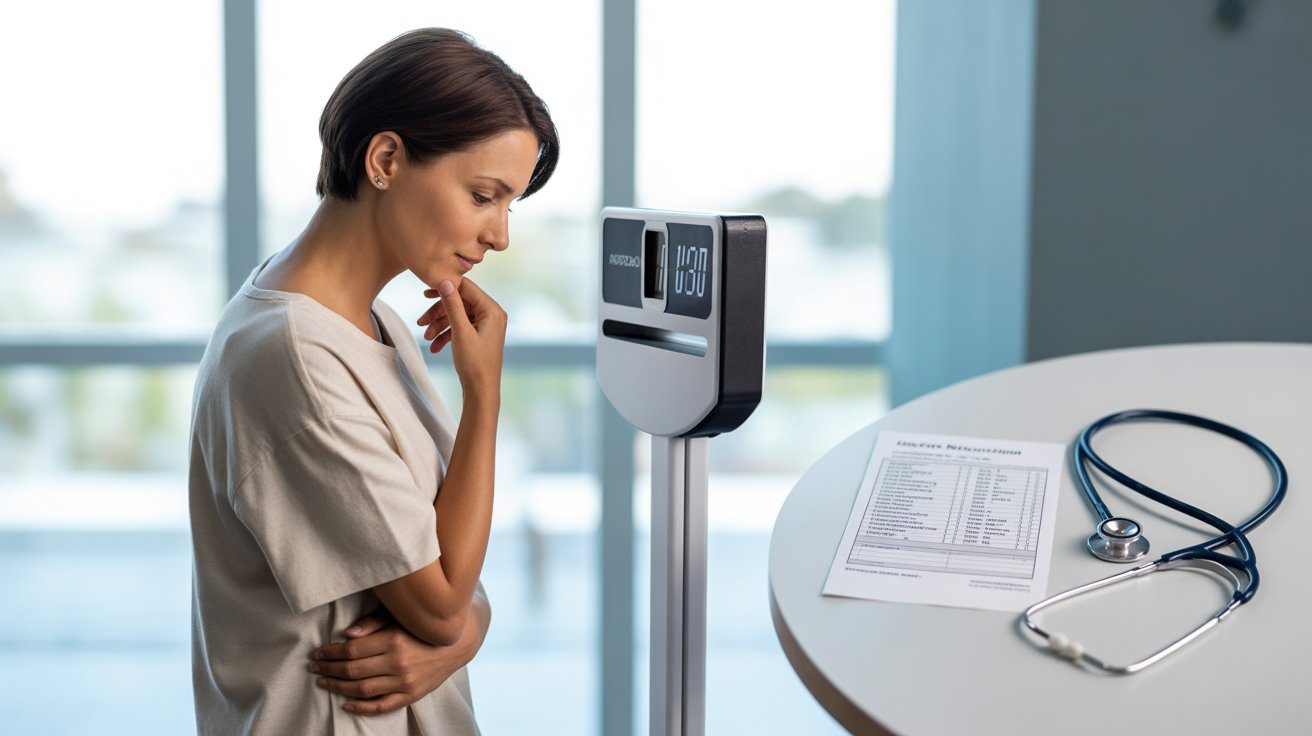
It is a question that comes up regularly in GP consultations — and the answer is more nuanced than a simple yes or no. High cholesterol and weight gain are closely associated: they tend to appear together, worsen together, and respond to the same lifestyle interventions. But that does not mean one directly causes the other. If you have been asking whether high cholesterol can make you gain weight, the evidence-based answer is that high cholesterol does not directly cause weight gain — but the relationship between them is genuinely complex, clinically important, and worth understanding clearly. There is also one specific context — involving the medication used to treat high cholesterol — where the connection is frequently misunderstood. This guide explains all of it.
The Direct Answer: Does High Cholesterol Cause Weight Gain?
No — high cholesterol does not directly cause weight gain. Cholesterol is a fatty, waxy substance that circulates in the bloodstream and performs essential biological functions: it is a structural component of every cell membrane in the body, a precursor for steroid hormones and vitamin D, and necessary for the production of bile acids that aid fat digestion. Elevated blood cholesterol — hypercholesterolaemia — does not alter the mechanisms of fat storage in adipose tissue, does not change caloric intake or expenditure, and does not directly stimulate the accumulation of body fat in any established biological pathway.
The scientific consensus, as reflected in research published in Healthline, K Health, and the Atlantic Cardiovascular clinical review series, is consistent on this point: high cholesterol is typically a result of weight gain and obesity — not a cause of it. The direction of causation, where it exists, runs the other way.
How Weight Gain Raises Cholesterol: The Evidence
While high cholesterol does not cause weight gain, excess weight is one of the most well-established drivers of dyslipidaemia. The mechanisms are multiple and well-documented:
Visceral Fat and LDL Production
Excess body fat — particularly visceral fat stored around the abdominal organs — disrupts normal lipid metabolism in several interconnected ways. The liver, which produces the majority of the body’s cholesterol, responds to increased fatty acid flux from visceral adipose tissue by ramping up very low-density lipoprotein (VLDL) production. Elevated VLDL is converted in the bloodstream to LDL, raising the circulating LDL cholesterol concentration. Research published in multiple longitudinal studies — including data from the National Runners’ Health Survey following participants over seven years — consistently shows that weight gain is associated with a statistically significant increase in the odds of developing hypercholesterolaemia. Adults who gained more than ten kilograms after the age of 20 were substantially more likely to develop high LDL cholesterol later in life.
Reduced HDL Cholesterol
Obesity also suppresses HDL — the high-density lipoprotein that performs the reverse cholesterol transport function, carrying excess LDL from the bloodstream back to the liver for clearance. The MONICA Augsburg cohort study, which tracked cholesterol changes in a large population over time, found that weight gain was associated with rising total cholesterol and falling HDL in both men and women. A lower HDL level means less efficient clearance of LDL from the blood, compounding the effect of increased LDL production. The result is a double adverse shift in the lipid profile — more bad cholesterol produced, less cleared.
Elevated Triglycerides
Carrying excess weight — especially around the abdomen — raises triglyceride levels by increasing the liver’s production of VLDL and impairing the clearance of triglyceride-rich lipoproteins from the circulation. Elevated triglycerides are an independent cardiovascular risk factor and are closely associated with low HDL and high LDL — a pattern sometimes called atherogenic dyslipidaemia that is particularly prevalent in people with abdominal obesity.
Non-Alcoholic Fatty Liver Disease
Obesity increases fat deposition in the liver — non-alcoholic fatty liver disease (NAFLD) — which fundamentally disrupts the organ’s ability to process and regulate cholesterol. The liver’s dual roles as cholesterol producer and LDL receptor — clearing LDL from the bloodstream — are both impaired in NAFLD, further elevating blood cholesterol levels. Research from Atlantic Cardiovascular confirms that obesity-related NAFLD is a major mechanism through which excess body weight translates into adverse cholesterol profiles.
Insulin Resistance and Metabolic Syndrome
Excess weight promotes insulin resistance — a state in which cells respond poorly to insulin, driving compensatory hyperinsulinaemia. Insulin resistance is associated with decreased lipoprotein lipase activity (impairing triglyceride clearance), increased hepatic LDL production, and reduced HDL. When insulin resistance is combined with elevated triglycerides, low HDL, hypertension, and central obesity — a cluster known as metabolic syndrome — the cardiovascular risk profile is substantially worse than any individual component alone. High cholesterol in this context is one manifestation of a broader metabolic disturbance driven largely by excess weight.
The Shared Root Causes: Why They Appear Together
High cholesterol and weight gain so frequently co-occur not because one causes the other, but because they share the same upstream drivers. Understanding this shared aetiology is clinically important because it means that addressing the root causes benefits both conditions simultaneously.
Diet High in Saturated and Trans Fats
Foods rich in saturated fat — fatty red meat, full-fat dairy, fried foods, baked goods made with palm or coconut oil — raise LDL cholesterol directly and are also calorie-dense, contributing to weight gain. A diet that drives high cholesterol is usually a diet that also promotes weight accumulation.
Physical Inactivity
A sedentary lifestyle both reduces HDL cholesterol (regular aerobic exercise is one of the most reliable ways to raise HDL) and reduces energy expenditure, making weight gain more likely over time. Increasing physical activity to 150 minutes of moderate-intensity exercise per week is recommended by both NICE and the British Heart Foundation for managing both weight and cholesterol.
Excess Alcohol Consumption
Alcohol raises triglycerides directly and contributes to caloric surplus. Regular heavy drinking is associated with both dyslipidaemia and weight gain — particularly visceral fat accumulation.
Genetic Factors
Familial hypercholesterolaemia (FH) — an inherited condition causing very high LDL from birth regardless of lifestyle — does not cause weight gain, but many genes that influence cholesterol metabolism also influence fat storage and metabolic rate. Genetic predisposition can contribute to both conditions appearing simultaneously in families even when lifestyle is relatively controlled.
Hormonal Changes
Menopause, hypothyroidism, polycystic ovary syndrome, and Cushing’s syndrome all simultaneously affect cholesterol metabolism and body weight. These conditions are a clinically important reason why both weight gain and cholesterol elevation can appear or worsen together — and why a GP assessment should always explore hormonal causes, not assume that lifestyle alone explains the picture.
The Most Important Exception: Hypothyroidism
One condition deserves particular emphasis because it is commonly missed and can cause both weight gain and raised cholesterol simultaneously, giving the false impression that the cholesterol is driving the weight change: hypothyroidism — an underactive thyroid gland.
Thyroid hormone regulates metabolic rate across virtually every tissue in the body. When thyroid function is insufficient — TSH elevated, free T4 below the reference range — metabolism slows, caloric expenditure decreases, and weight accumulates even without any change in diet or activity. At the same time, hypothyroidism impairs LDL receptor activity in the liver, reducing LDL clearance from the bloodstream and raising total and LDL cholesterol. The result is a patient who is gaining weight and developing high cholesterol simultaneously — both driven by the same underlying thyroid deficiency, not by one causing the other.
This is one of the most important clinical reasons why a patient presenting with both weight gain and elevated cholesterol should have thyroid function tested as part of any comprehensive metabolic assessment. Treating the thyroid condition can simultaneously improve both the weight and the cholesterol without the patient needing to make dramatic lifestyle changes. Missing the diagnosis and treating only the cholesterol — with a statin — leaves the underlying cause unaddressed and the patient no better for the weight gain.
Do Statins Cause Weight Gain?
A related question that patients frequently ask — particularly those who notice weight changes after starting cholesterol medication — is whether statins themselves cause weight gain. This is worth addressing clearly, because the timing of statin initiation and the onset of weight gain often coincide for an entirely unrelated reason.
Statins are most commonly started in middle age — a period when metabolic rate naturally slows, sex hormone levels decline (oestrogen in women approaching menopause, testosterone in men), and muscle mass begins to decrease. According to UPMC (University of Pittsburgh Medical Center), there is no evidence from clinical trials that statins promote belly fat accumulation or increase waist circumference. The weight gain that some patients notice after starting a statin is almost certainly attributable to age-related metabolic changes that coincide with the age at which statins are prescribed, not to the medication itself.
This is an important reassurance: if you are on a statin and have gained weight, the statin is unlikely to be responsible. However, statin-associated fatigue and muscle symptoms are a genuine side effect in some patients — as explored in our previous blog on cholesterol and tiredness — and fatigue-related reduction in physical activity could theoretically contribute to weight gain indirectly. If you have concerns about your statin and your weight, a GP consultation is the appropriate place to explore this rather than stopping the medication without guidance.
How Much Weight Loss Is Needed to Improve Cholesterol?
The clinical evidence on this point is genuinely encouraging. Research consistently shows that even modest weight loss — in the range of 5 to 10% of body weight — produces meaningful improvements in the lipid profile. A study at a Weight Management Center following over 600 adults in a structured lifestyle change programme found that participants who lost more than 10% of their body weight achieved the greatest reductions in LDL cholesterol. Losing as little as five to ten kilograms in a person weighing around 90 kilograms can lower LDL, raise HDL, and reduce triglycerides to a clinically meaningful degree.
The mechanism is straightforward: weight loss reduces visceral fat, decreases hepatic fat deposition, improves insulin sensitivity, restores more normal VLDL and LDL production by the liver, and increases HDL. The lipid improvements from weight loss are additive to — and in some cases partially substitutive for — statin therapy, particularly for patients whose dyslipidaemia is primarily driven by obesity rather than genetics.
A patient seen at The Private GP Birmingham — a man in his early fifties with a BMI of 32 and a total cholesterol of 7.1 mmol/L — had been told by his NHS GP that he needed to start a statin. He was keen to try lifestyle intervention first. Dr Ul-Haq arranged a full metabolic blood panel including thyroid function, HbA1c, liver function, and a full lipid profile, which revealed normal thyroid function, borderline HbA1c at 42 mmol/mol, and a triglyceride level of 3.8 mmol/L consistent with metabolic syndrome. A structured discussion about weight management followed, and he was referred to our weight loss service alongside dietary advice targeting saturated fat and refined carbohydrates. At his three-month review, he had lost 7 kg — approximately 8% of his starting weight. His total cholesterol had fallen to 5.9 mmol/L, LDL from 4.8 to 3.7 mmol/L, and triglycerides from 3.8 to 2.1 mmol/L. He did not require a statin. The weight loss had done the work.
What to Do If You Have Both High Cholesterol and Weight Concerns
If you have been found to have high cholesterol and are also concerned about your weight, the most productive approach is a comprehensive clinical assessment — not focused on one number in isolation, but examining the full picture of your metabolic health. At The Private GP Birmingham, this means:
- A full cholesterol blood test — complete fasting lipid profile including LDL, HDL, non-HDL, and triglycerides
- Thyroid function testing — TSH and free T4 — to exclude hypothyroidism as a cause of both weight gain and raised cholesterol
- HbA1c and fasting glucose — to assess for insulin resistance, prediabetes, or diabetes
- Liver function tests — to assess for NAFLD contributing to dyslipidaemia
- Blood pressure measurement and QRISK3 cardiovascular risk calculation — contextualising the cholesterol within your overall heart disease risk
- A personalised discussion about dietary change, physical activity, and — where clinically indicated — weight management support
If you are ready to understand your cholesterol in the context of your full metabolic health — and to receive a personalised clinical plan rather than a number and a generic leaflet — book a face-to-face consultation at The Private GP Birmingham today. Same-day appointments are available, and our private blood test service can deliver same-day results across all relevant markers.
Frequently Asked Questions
- Can high cholesterol levels make you gain weight?
No — high cholesterol does not directly cause weight gain. Cholesterol is a substance that circulates in the bloodstream and does not directly influence fat storage mechanisms or caloric balance. However, high cholesterol and weight gain frequently appear together because they share the same root causes: a diet high in saturated fat, physical inactivity, excess alcohol, and underlying conditions such as hypothyroidism or insulin resistance. The direction of causation, where it exists, runs from weight gain to raised cholesterol — not the reverse.
- Does weight gain cause high cholesterol?
Yes — excess weight, particularly visceral fat stored around the abdomen, raises LDL cholesterol and triglycerides while lowering HDL cholesterol. The mechanisms include increased hepatic VLDL production driven by excess fatty acid flux from adipose tissue, impaired LDL clearance in the context of fatty liver disease, and insulin resistance reducing lipoprotein lipase activity. The National Runners’ Health Survey found that weight gain significantly increased the odds of developing physician-diagnosed hypercholesterolaemia over a seven-year follow-up period. Losing 5 to 10% of body weight produces meaningful improvements in the lipid profile.
- Can hypothyroidism cause both weight gain and high cholesterol?
Yes — and this is one of the most clinically important things to exclude when a patient presents with both weight gain and elevated cholesterol. Hypothyroidism slows metabolic rate, causing weight accumulation, and simultaneously impairs LDL receptor activity in the liver, raising blood cholesterol. Both effects resolve or improve substantially with appropriate thyroid hormone replacement. This is why thyroid function testing is an essential component of any assessment of raised cholesterol — particularly where weight gain is also present. A comprehensive blood test at The Private GP Birmingham includes both cholesterol and thyroid function in a single same-day panel.
- Do statins cause weight gain?
The clinical evidence does not support statins as a direct cause of weight gain. According to UPMC and multiple clinical trial analyses, there is no evidence that statins increase belly fat, waist circumference, or body weight. Weight gain that appears to coincide with statin initiation is most likely attributable to the age-related metabolic changes that occur at the same stage of life when statins are typically prescribed — declining sex hormones, slowing metabolism, and gradual reduction in physical activity. If you are concerned about your weight and your cholesterol medication, discuss this with a GMC-registered GP before making any changes to your medication.
- How can I improve both my cholesterol and my weight at the same time?
Because high cholesterol and excess weight share the same root causes, the most effective lifestyle interventions address both simultaneously. The evidence-based approach — consistent with NICE, NHS, and British Heart Foundation guidance — includes: replacing saturated and trans fats with unsaturated fats (olive oil, oily fish, avocado, nuts); increasing soluble fibre from oats, pulses, and vegetables; achieving 150 minutes of moderate-intensity aerobic exercise per week; reducing alcohol consumption; and stopping smoking. Losing 5 to 10% of body weight produces clinically meaningful improvements in LDL, HDL, and triglycerides. At The Private GP in Birmingham, our weight loss service provides structured, medically supervised support for patients who want to address both conditions through the most effective and sustainable route.