

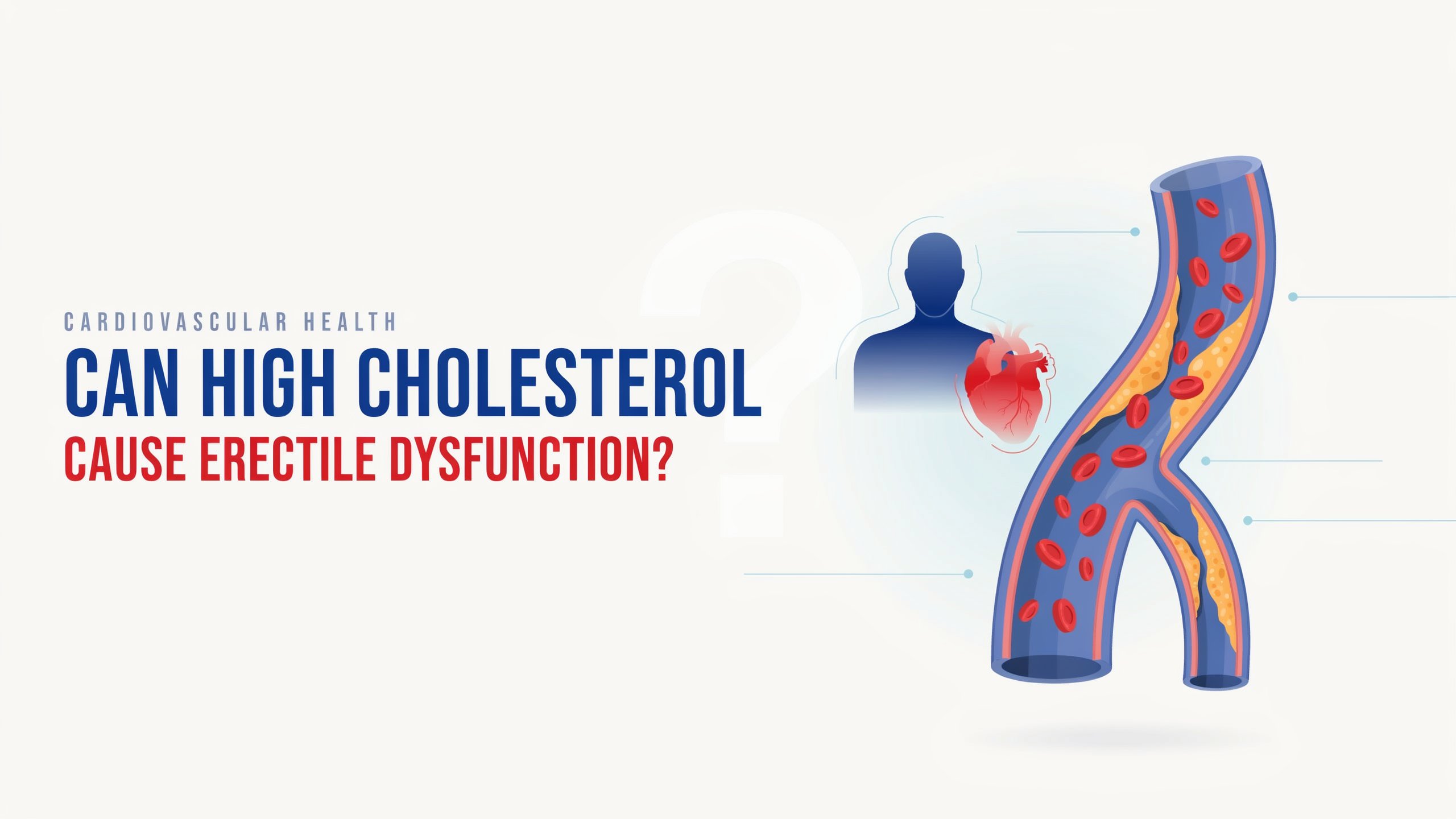
TL;DR: Yes, high cholesterol — specifically elevated LDL — is a well-documented and mechanistically understood cause of erectile dysfunction. A Mendelian randomisation study found a genetic association between high LDL and ED, supporting a true causal relationship rather than mere correlation. LDL damages the blood vessel lining and reduces nitric oxide availability, directly impairing the blood flow erections depend on. Lowering cholesterol, including with statins, has been shown in a meta-analysis to significantly improve erectile function scores.
A cholesterol reading on a blood test result can feel abstract — a number with no obvious connection to daily life. Erectile function is not abstract at all, and the link between the two is one of the most direct and well-established relationships in cardiovascular medicine.
Is There a Genuine Link Between High Cholesterol and ED?
Yes — and the evidence goes well beyond simple correlation, which is what makes this particular link unusually convincing.
A Mendelian randomisation study published in Nature Scientific Reports found a genetic association between high LDL cholesterol concentrations and erectile dysfunction. Mendelian randomisation is a research method that uses naturally occurring genetic variation as a kind of built-in experiment. Because the genetic variants that influence LDL levels are assigned essentially at random at conception, and are present for life, this method largely sidesteps the confounding and reverse causation problems that plague typical observational studies — where it is hard to know whether high cholesterol causes ED, whether some third factor causes both, or whether the relationship runs the other way entirely.
Finding a genetic signal linking LDL levels specifically to ED risk is a considerably stronger form of evidence than simply observing that men with high cholesterol also tend to have more erectile dysfunction. It suggests LDL itself is doing something biologically relevant to erectile function, not just travelling alongside it in the same population of unhealthy men.
How High Cholesterol Actually Damages Erectile Function
The mechanism connecting LDL cholesterol to erectile dysfunction is well characterised and runs through the same vascular pathway responsible for most physical causes of ED.
Research published in PMC examining LDL as a marker of erectile dysfunction in men with coronary artery disease describes LDL cholesterol as playing a central role in endothelial dysfunction through three connected mechanisms: promoting oxidative stress, decreasing nitric oxide bioavailability, and exacerbating vascular inflammation. Each of these works against the precise process an erection depends on.
The endothelium is the thin inner lining of every blood vessel in the body, and its job during arousal is to respond to nerve signals by releasing nitric oxide, which relaxes the smooth muscle in the penile arteries and allows blood to flow in. Elevated LDL damages this lining directly. Oxidised LDL particles trigger oxidative stress within the vessel wall, provoke inflammation, and reduce the endothelium’s ability to produce and respond to nitric oxide. The net effect is an artery that cannot dilate as readily as it should — exactly the mechanical failure that underlies vasculogenic ED.
This is not only a human clinical finding. Animal research cited in a related review found that mice genetically engineered to lack LDL receptors, when fed a high-cholesterol diet, showed a significantly reduced erectile response, along with measurably increased oxidative stress directly within penile tissue. This gives a clean, controlled demonstration of the same mechanism implicated in the human data.
Why This Matters Most for Men With Heart Disease
Erectile dysfunction and high cholesterol cluster together most heavily in men who already have, or are developing, coronary artery disease — and this overlap is clinically significant rather than coincidental.
The same PMC research on LDL and ED in coronary artery disease patients found a striking distribution of erectile dysfunction severity within this population: 38.5% had mild ED, 23.1% mild-to-moderate, 21.1% moderate, and 13.5% severe ED. In other words, the overwhelming majority of men with established coronary artery disease in this cohort had some degree of erectile dysfunction.
This is because ED and coronary artery disease share the same underlying pathophysiology — endothelial dysfunction and atherosclerosis affecting arteries throughout the body, including both the coronary arteries and the smaller penile arteries. The penile arteries are narrower, which means they often show the effects of this process earlier and more visibly than the coronary arteries do. ED in a man with risk factors for heart disease is not simply an inconvenient side issue — it is frequently the first noticeable symptom of a vascular problem that has not yet caused chest pain or breathlessness. Evaluating erectile function in men with cardiovascular risk factors offers a genuine opportunity for earlier intervention, not just better sexual health.
Can Lowering Cholesterol Improve Erectile Function?
Yes — and this is one of the more encouraging and well-supported findings in this entire area of research.
A systematic review and meta-analysis published in PMC, combining data from seven randomised controlled trials involving 586 patients, found that statin treatment was associated with a statistically significant improvement in IIEF-5 erectile function scores, alongside significant improvements across the full lipid profile — total cholesterol, LDL, HDL, and triglycerides all improved meaningfully.
The mechanism behind this improvement goes beyond simply lowering a number on a blood test. Statins reverse endothelial dysfunction by reducing the harmful action of oxidised LDL on endothelial cells, which increases nitric oxide activity — directly reinstating the signalling pathway that LDL had been disrupting. Notably, several studies have found that statins can improve endothelial function quite rapidly, sometimes before the cholesterol levels themselves have meaningfully changed, suggesting a benefit that runs somewhat independently of the lipid-lowering effect itself.
This is not a new or speculative idea. An early clinical observation study, published in the Journal of Urology, specifically selected 18 men whose only identifiable risk factor for ED was elevated cholesterol — no diabetes, no hypertension, no smoking, nothing else clouding the picture — and found that statin treatment improved their erectile function. Two decades of subsequent research have built on this initial, carefully controlled observation.
Does This Mean Everyone With High Cholesterol and ED Should Take a Statin?
Not automatically — and being honest about the remaining uncertainty here matters.
While the meta-analysis evidence is genuinely positive, the broader picture is not entirely settled. A separate Mendelian randomisation study examining lipid-lowering drug targets explicitly describes the effect of lipid-lowering drugs on male erectile function as still controversial in the wider literature, reflecting genuine ongoing scientific debate rather than a fully resolved question.
The decision to start a statin should be based on your overall cardiovascular risk profile — established guidelines recommend statin therapy for secondary prevention in anyone with diagnosed cardiovascular disease, and for primary prevention in those with very high LDL or diabetes — not on the presence of ED alone. If your cholesterol is high enough to warrant treatment on cardiovascular grounds, an associated improvement in erectile function is a welcome additional benefit rather than the primary reason. If your cholesterol is only mildly elevated and your cardiovascular risk is otherwise low, dietary change, increased physical activity, and weight management may be the more appropriate first step, with medication reserved for cases where lifestyle measures are insufficient or risk is higher.
Other lipid-lowering approaches beyond statins — including ezetimibe and PCSK9 inhibitors — exist for specific clinical situations and work through different mechanisms. Which approach, if any, is appropriate depends on your individual cardiovascular risk, not a generic rule.
What to Do If You Have High Cholesterol and Erectile Dysfunction
The right starting point is a full lipid panel rather than relying on a single total cholesterol figure, since LDL specifically — not total cholesterol — is the marker most directly implicated in the mechanism described above.
Beyond cholesterol, a broader cardiovascular risk assessment is the appropriate response to ED in general, given how strongly the two conditions overlap. This should include blood pressure, blood glucose or HbA1c, and a formal cardiovascular risk calculation alongside your lipid results. Our private blood tests cover the full lipid panel and the wider cardiovascular markers relevant to this picture, with same-day results.
At The Private GP in Birmingham, a private GP consultation can review your individual cardiovascular risk profile and discuss whether cholesterol-lowering treatment is appropriate for you, alongside any other factors contributing to your erectile dysfunction. Same-day appointments available, no referral needed.
Frequently Asked Questions
How quickly can high cholesterol affect erectile function?
This varies, as cholesterol-related vascular damage accumulates gradually over years rather than suddenly. However, research shows that the endothelial dysfunction it causes can begin improving relatively quickly once cholesterol is properly managed — sometimes within weeks of starting effective treatment.
Is LDL or total cholesterol more important for erectile dysfunction?
LDL specifically is the marker most directly implicated in the research, including the genetic Mendelian randomisation evidence. A full lipid panel breaking down LDL, HDL, and triglycerides gives a more clinically useful picture than total cholesterol alone.
Can diet alone improve cholesterol-related erectile dysfunction?
For some men, yes, particularly with mildly elevated cholesterol and no other major risk factors. Dietary changes that lower LDL and improve vascular health can meaningfully help. For others with more significant elevation or additional cardiovascular risk, medication alongside diet produces better outcomes.
Will a statin definitely fix my ED if I have high cholesterol?
Not definitely. Meta-analysis evidence shows a significant average improvement across study populations, but ED is usually multifactorial, and the wider research on lipid-lowering drugs and erectile function is still described as somewhat controversial. A statin may help, but it is not guaranteed to fully resolve ED on its own.
Should I get my cholesterol checked if I have new erectile dysfunction?
Yes. Given how strongly the two conditions are linked, a full lipid panel is a sensible and often overlooked part of investigating new erectile dysfunction, particularly alongside blood pressure and blood glucose testing.