

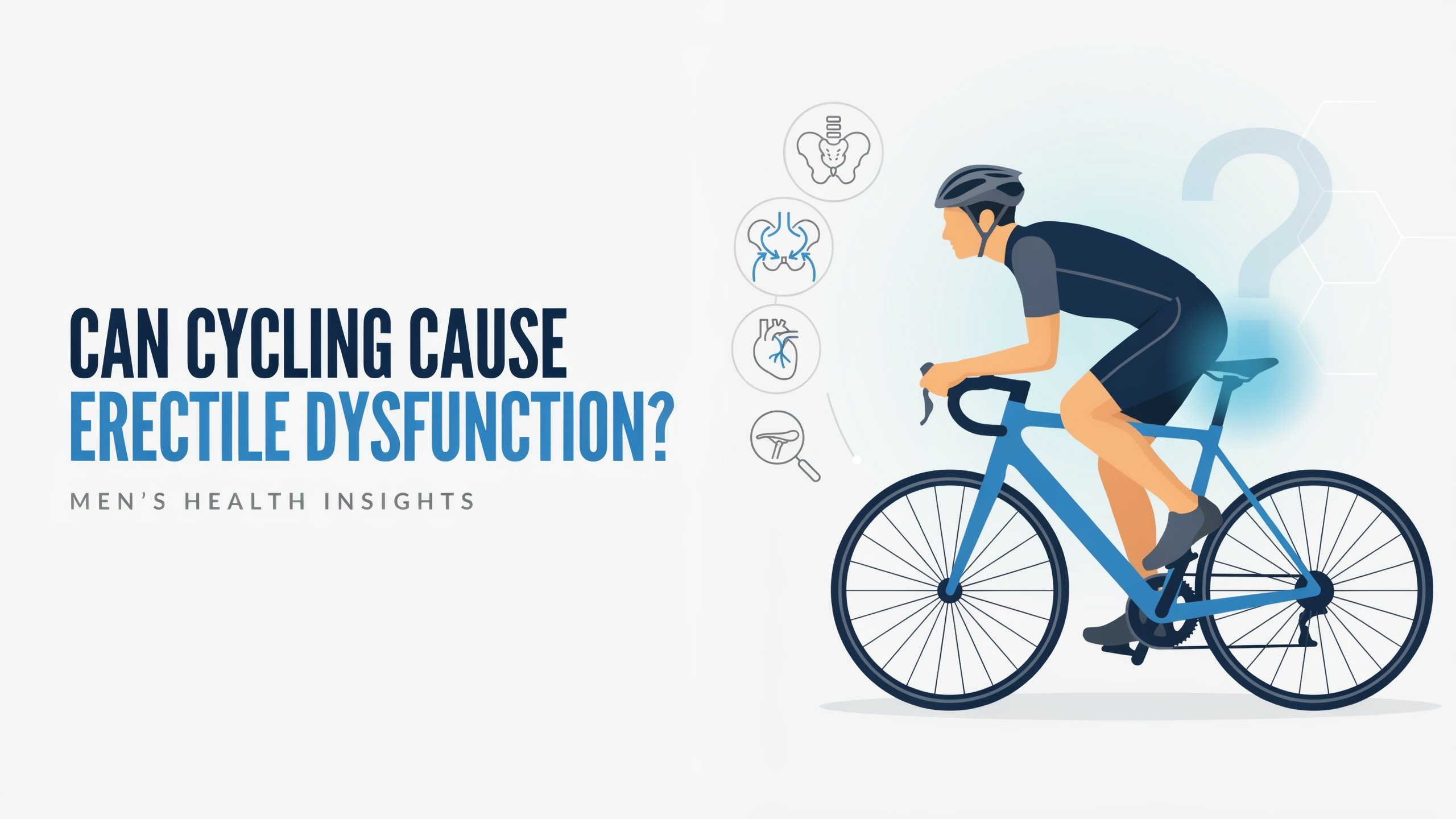
TL;DR: Yes, cycling can cause erectile dysfunction, but the risk is specific rather than general — it concentrates in men who cycle more than three hours a week, particularly with poor saddle choice or position. The mechanism is compression of the pudendal nerve and arteries between the saddle and pelvis, which can cause numbness and, with repeated compression, longer-term erectile difficulty. Saddle design, bike fit, and handlebar height all measurably affect this risk, and most cyclists can significantly reduce it with simple changes.
Cycling is one of the best forms of cardiovascular exercise available, and cardiovascular fitness is itself protective against erectile dysfunction — which makes the question of whether cycling causes ED a genuinely interesting paradox. The honest answer involves a specific mechanical mechanism that has been studied directly, with findings precise enough to point to exactly what changes reduce the risk.
How Cycling Can Cause Erectile Dysfunction
The mechanism here is mechanical, not hormonal or vascular in the way most other causes of ED are. Sitting on a bicycle saddle places sustained pressure directly on the perineum — the area between the genitals and the anus — which sits right on top of the pudendal nerve and the arteries supplying blood to the penis.
A literature review on bicycling and erectile dysfunction describes early clinical investigations measuring exactly this effect. One study used a digital blood pressure cuff to measure penile systolic pressure before, during, and after men sat on an unpadded bicycle saddle. After five minutes of sitting, penile pressure had dropped to 60% of baseline — a substantial and immediate reduction in blood supply, though pressure returned fully to normal after a 10-minute recovery period off the saddle.
This compression can affect both the nerve and the artery. Compression of the pudendal nerve produces the numbness or tingling sensation many cyclists are familiar with. Compression of the arteries reduces blood flow more directly. With brief or occasional exposure, both effects reverse quickly once pressure is relieved. The concern arises with repeated, prolonged, and high-pressure exposure over time, where the same review notes documented cases of genuine nerve injury — one report described electromyographical evidence of bilateral pudendal nerve damage in a man following excessive cycling combined with an episode of perineal trauma, who experienced both penile numbness and erectile dysfunction.
Who Is Actually at Risk?
This is the most important distinction to make, because the risk is not evenly distributed across everyone who rides a bike.
According to a Harvard Medical School special health report on erectile dysfunction, the Massachusetts Male Aging Study found that the risk of cycling-related nerve and artery compression leading to erectile problems was highest specifically among men who cycled more than three hours a week. Below this threshold, the picture looks considerably less concerning.
The Pulsus literature review cites a comparative study that found cyclists presented with erectile dysfunction 80% more frequently than horse riders or runners — but this comparison involved committed, high-volume cyclists, averaging 142 kilometres per week, not casual or occasional riders. A separate 2014 observational study found that cycling did not pose a serious threat of ED or infertility at more typical recreational volumes.
There is also a genuine paradox worth holding in mind here. Regular cardiovascular exercise, including cycling, independently improves the vascular health that protects against erectile dysfunction through entirely separate mechanisms — better blood pressure, healthier cholesterol, improved endothelial function. For most recreational cyclists, these cardiovascular benefits likely outweigh any mechanical risk from saddle pressure. The concern is genuinely concentrated at the higher end of cycling volume and intensity, not a reason for the average commuter or weekend rider to be alarmed.
Saddle Design — the Counterintuitive Finding
Saddle shape has a measurable and sometimes surprising effect on this risk, and the research here contains a genuinely counterintuitive finding worth knowing before you buy a new saddle assuming the marketing claims are accurate.
Narrow saddles, and particularly those with a V-shaped nose, have been shown in European Urology research to reduce oxygen levels in the penis substantially — by 82.4% with narrow saddles and 72.4% with narrow V-shaped nose designs, according to findings reported by Harvard Health. This is a striking reduction and provides a clear mechanistic explanation for why saddle shape matters so much.
The counterintuitive part concerns “cutout” saddles — those with a central groove or hole specifically marketed as relieving perineal pressure. A prospective cohort study of 463 long-distance cyclists, published in PMC, found that in subjects who reported perineal numbness during their ride, using a saddle with a cutout actually increased the risk of erectile dysfunction, with a relative risk of 6.0 — the opposite of what the marketing for these saddles claims. Interestingly, the same study found cutout saddles decreased ED risk in cyclists who did not report numbness during the ride. The study’s authors noted some uncertainty about whether men with a prior history of numbness and ED were simply more likely to choose cutout saddles in the first place, which could partly explain this unexpected finding.
The practical lesson is that saddle choice should be individualised based on your own experience, rather than assumed from product marketing. If you experience numbness on a particular saddle, including a cutout design, that is useful personal data — not something to ignore because the saddle was specifically marketed to prevent the problem.
Bike Fit and Position — What Actually Reduces Risk
Beyond saddle shape, how the bike is set up and how you sit on it measurably changes the pressure on the perineum.
The PMC cohort study found that handlebar height parallel with or higher than the saddle increased the risk of erectile dysfunction compared with handlebars positioned lower than the saddle. A lower handlebar position shifts the rider’s weight forward, off the perineum and onto the hands and arms, reducing the sustained pressure on the area where the pudendal nerve and arteries are most vulnerable.
A 2014 study in Applied Ergonomics, cited by Harvard Health, found that a saddle nose no longer than 6 centimetres was associated with reduced risk. A wide, well-padded saddle — a gel-filled design is a reasonable choice — distributes weight over a larger surface area and reduces peak pressure on any single point.
The same PMC study’s overall recommendation for long-distance cyclists wanting to minimise ED risk was specific and practical: ride a road bicycle rather than a mountain bicycle (which tends to position riders more upright and creates different pressure distribution), keep handlebar height lower than saddle height, and avoid a cutout saddle specifically if you experience perineal numbness during rides.
Beyond equipment, simply standing on the pedals periodically during longer rides — even briefly every 10 to 15 minutes — interrupts sustained compression and allows blood flow and nerve function to recover before resuming the seated position.
What Are the Warning Signs to Watch For?
Penile or perineal numbness during or after cycling is the clearest early signal that something about your position or equipment needs to change before the problem becomes more persistent.
Numbness that resolves quickly once you are off the bike is a useful warning rather than a cause for alarm — it tells you that pressure was high enough to affect nerve function temporarily, and it is the point at which adjusting saddle, position, or riding frequency is most likely to prevent further progression. Numbness that persists for hours after riding, or that is beginning to occur with increasing frequency, deserves more serious attention.
The documented case described earlier — a man who developed genuine bilateral pudendal nerve injury following excessive cycling and a specific episode of perineal trauma — illustrates what happens when these warning signs are repeatedly ignored over time. The nerve compression that initially produces temporary numbness can, with sustained and repeated exposure, progress to genuine nerve damage that takes considerably longer to resolve, or in some cases does not fully resolve.
When to See a GP About Cycling-Related ED
If numbness or erectile difficulty persists despite changing your saddle, adjusting your handlebar height, and varying your position during rides, it is worth getting properly assessed rather than assuming it will continue to be a purely mechanical issue.
This matters because cycling-related compression rarely exists in complete isolation from other potential contributors. A man in his fifties who cycles regularly may have cycling-related perineal compression and age-related vascular risk factors occurring simultaneously, and addressing the saddle alone will not resolve ED that has multiple contributing causes. A proper assessment should consider blood pressure, cholesterol, blood glucose, and testosterone alongside the cycling-specific mechanical factors. Our private blood tests cover all of these markers with same-day results.
At The Private GP in Birmingham, a private GP consultation can help distinguish between purely mechanical, cycling-related causes and other contributing factors, and advise on the right next steps for both. Same-day appointments available, no referral needed.
Frequently Asked Questions
How many hours of cycling per week is considered risky for ED?
Research points to more than three hours per week as the threshold where risk becomes more apparent, based on findings from the Massachusetts Male Aging Study. Below this, the evidence for increased risk is considerably weaker.
Are cutout saddles better or worse for preventing ED?
It depends on your individual experience. Research found cutout saddles reduced ED risk in cyclists without perineal numbness, but actually increased risk in those who experienced numbness during rides. Choose based on how your body responds, not assumptions from saddle marketing.
Will cycling-related ED go away if I stop cycling?
In most cases, yes, particularly if the issue is recent and related to acute nerve or vascular compression rather than established nerve injury. Numbness and mild erectile difficulty often improve significantly once pressure is removed, though longer-standing nerve injury can take more time to resolve.
Should I worry about cycling ED if I only ride occasionally?
Probably not significantly. The clearest evidence for increased risk concentrates in cyclists doing more than three hours per week, often at high volumes such as 100km or more weekly. Occasional or moderate recreational cycling has not been shown to carry the same risk.
Does an electric bike carry the same erectile dysfunction risk as a regular bike?
The same saddle pressure mechanism applies regardless of whether the bike is electric or not, since the issue relates to perineal compression from sitting position rather than pedalling effort specifically. Saddle choice, bike fit, and riding position remain the relevant factors either way.